


Ready to start your education journey?
Contact us today to create your personalized professional development plan and bring your teaching to the next level.
I’m going to be addressing books mostly in this article, but most of what I talk about here applies to any professional resource. That could include a video, article, trifold guide, or blog post. There are a lot of different genres of professional books for teachers and school staff. Some are autobiographical, where we learn lessons or are inspired from reading about someone’s life. Others are more of a workbook that leads an individual or group through a process. Overall, I find that some of the easiest and most impactful professional development books have a good balance between academic research and practical application. Usually, these types of books are great for people who want to know the “why” behind a particular topic and those who are looking for the “what” on how to implement it. By finding a book that provides both of these needs for professional development, I find that it can be quite impactful in changing the educational pedagogy of staff and their practices.
I also look for books that are clear with their message. When a book has a strong focus, it is much easier to see teachers put those ideas into action. Some authors approach their writing with a more formal tone, while others are more informal with their approach. I’m not sure if one is better than the other, but I am seeing a trend in more informal writers, and I think that does help engage readers when they feel like they get to know the author through the book. Sometimes this comes across in personal stories. In other books, authors might rely on vignettes from people they have worked with. Either way, including a narrative element has the benefit of giving a more personal touch to a topic. I’ve also found books with reflection questions, a leader guide, or an accompanying workbook can be helpful when leading a book study.
A few things can help get staff to join book studies. The first is the most difficult. It’s creating a culture of learning in the staff. This may take a while to develop, but having professional development as front and center to the work a school or district does is important to the continuous improvement cycle. Just picking one year to offer book studies is not going to be as impactful as creating a culture where staff members are regularly reading and discussing what they are learning about. Some districts have helped encourage this practice by building in professional development hours as part of their teacher contracts instead of the more traditional “professional development day.” This could allow a group to meet outside the school day to read and discuss what they are learning.
Providing multiple professional book studies can also be helpful in getting staff members to join a group. This will allow teachers to pick topics and books that they feel have a direct impact on them and their students. Allowing this autonomy is very motivating and can help develop strong relationships between teachers who have similar interests. It can also allow schools and districts to try different times to meet. Some teachers may prefer an early morning meeting to avoid conflicts with clubs or sporting events. Others would rather do it after school. Others rather meet during lunch to talk. By giving multiple ways for staff to engage, that will help create a sense of ownership in their own learning.
I’ve got a few easy, go-to activities and protocols that I like to do with book studies. Not only does planning for different activities mix things up a bit when it comes to our discussion time, it also models good activities that teachers can use in their classrooms with students. Here are a few of my favorite activities that work for most books or professional resources.
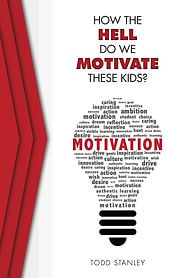
Save the Last Word for Me (examples from How the Hell Do We Motivate These Kids by Todd Stanley):
How did you feel about the requirement to use the text to support your specific idea?
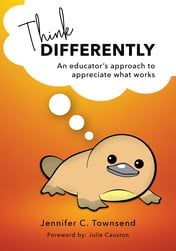
3-2-1 (Examples from Think Differently by Jennifer Townsend)
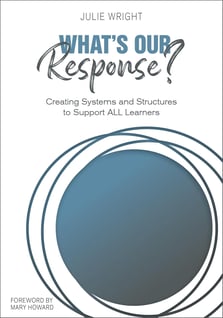
4 A’s (example from What’s Our Response? by Julie Wright)
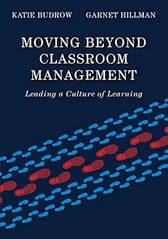
Affinity Mapping (example from Moving Beyond Classroom Management by Katie Budrow and Garnet Hillman)
Of course there are a lot of supplemental activities you can do with book studies. One of the easiest and more impactful things you can do is reach out to the authors to see if they could arrange for a short webinar or talk with your group. You’d be surprised how many are very willing and excited to talk to people about their books. They may also point you to articles or videos that they’ve created/seen that relates to the work you are doing. They may even know some other schools or districts that are participating in the same book study and could provide some ideas of how they are doing things in their schools and districts.
Professional book studies are by far one of the quickest, cost-effective ways that schools and districts can provide flexible, teacher-directed professional development to staff. It not only equips teachers with the skills and knowledge they need to be successful in their classroom, but it also builds a learning culture that will build momentum for the future.

Looking to update your current assessment and grading practices? Our team provides workshops, institutes, keynotes and coaching customized to meet your needs.


Wondering how to best leverage your collaborative teams to impact student learning? Jenni Donohoo and her team are at the forefront of this work. Bring the experts to your school or district!

.png?width=500&height=500&name=PLC%20Center%20(White).png)
Focused on secondary literacy, with years of practical experience, our team is excited to learn more about your school's goals and to custom design a path that gets you there!

Wondering how you can implement high quality, high impact mathematics instruction in your school or district? Let our team guide you!

.png?width=500&height=500&name=Publishing%20Logo%20(Transparent%20Background).png)
Workshops, institutes, long-range planning, and virtual or onsite coaching custom designed to move student learning forward in your school or district.

Contact us today to create your personalized professional development plan and bring your teaching to the next level.